Siblings,
Yesterday we spent time reflecting on the dangers of lust. Our thoughts turned inward, to guard ourselves against the same. Let us expand our thoughts to hear God’s response to such actions. Consider Today’s Holy Nougat.
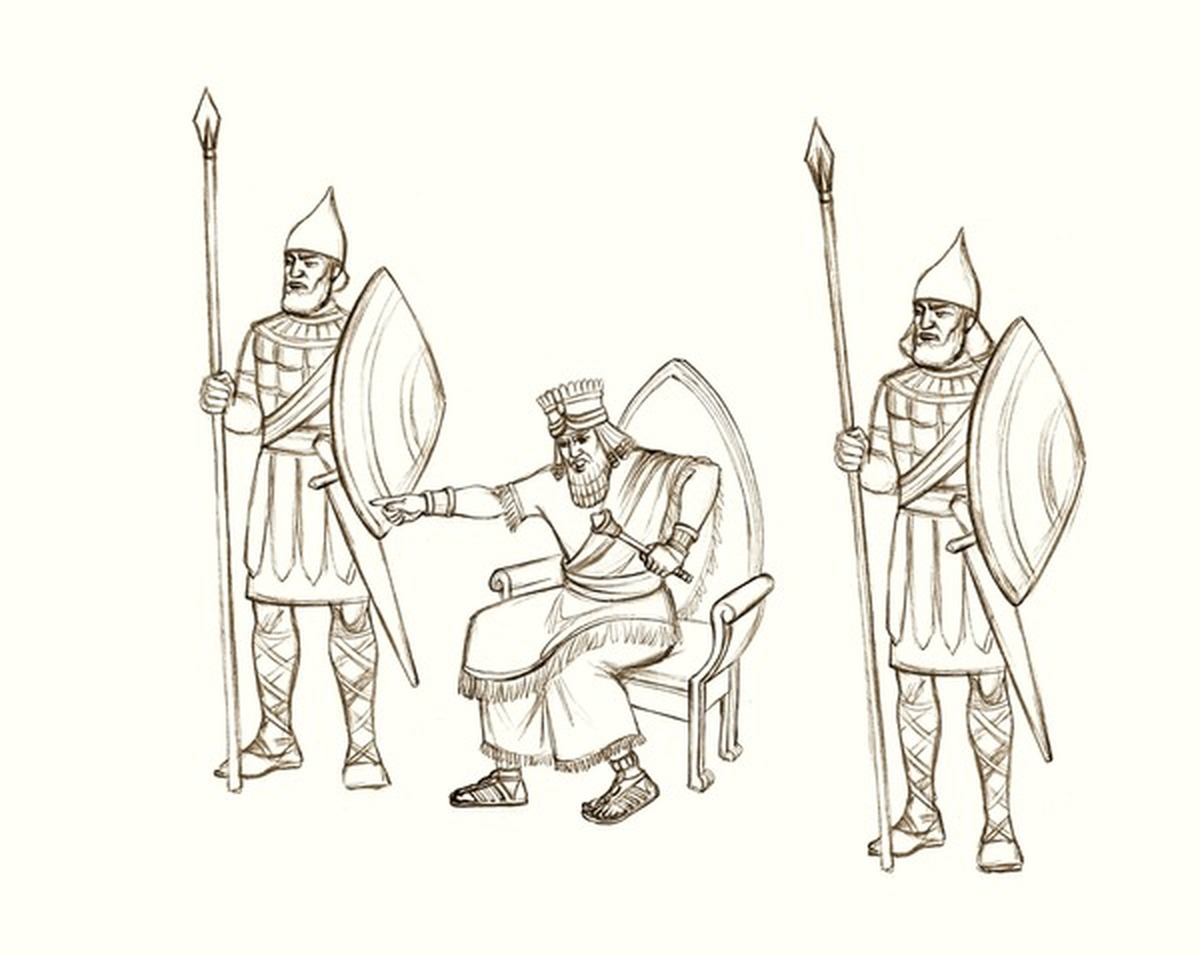
Exodus 15:9-10 AFV
[9] The enemy said, ‘I will pursue, I will overtake, I will divide the spoil; my lust shall be satisfied upon them, I will draw my sword, my hand shall destroy them.’
[10] But, You blew with Your wind; the sea covered them. They sank like lead in the mighty waters.
Mighty Warrior, Great in Battle
In the book of Joshua, chapter 5 to be more specific, we are told of an encounter Joshua had with an angel of the Lord. This wasn’t an ordinary angel, he was a warrior, armed with a drawn sword. When Joshua asked the angel, ‘Are you for us or against us?’, he was told, Neither. I have always found that curious, because the angel was ready for battle. Each time I read it, I arrive at the same conclusion – the angel is God’s warrior, and is on God’s side.
Only God’s side.
Self-Check
Do we dedicate ourselves to being solely on God’s side? What does that mean for us?
Deeper Dive
God’s side is dedicated to justice. For, as some of my African American friends would say, God don’t like ugly! Lust, whether for power, wealth, or sexual desires, is against God’s will (see Galatians 5:16 and 1 John 2:16). Anyone, whether us or others, who yields to lust, is setting himself or herself up for God’s wrath. That’s what Pharaoh did. The consequences he and his army faced were deadly.
But God doesn’t only mete out justice to our enemies. That’s the point of the angel’s reply to Joshua.
We recall that lust cost the
Children of Israel a battle: the perpetrator and family were then severely punished (see Joshua 7:1-26).
It also costed
Saul the kingdom of Israel (see 1 Samuel 15);
David a child (with lust and bloodshed plaguing his family lineage – see 2 Samuel 11-13); and
Judas his friends and his life.
God does not condone lust nor injustice in anyone.
But
Exodus 34:6; Psalms 103:8; 86:15; as well as 145:8, confirm that God is slow to anger. In fact, God desires that no one should perish, so we’re given time to yield to God’s Spirit and repent. In so doing, God doesn’t treat us as our sins deserve. That’s grace. If we still choose disobedience, like Pharaoh did, then we will face the consequences of God’s anger.
As we celebrate God’s salvific work on our behalf, we may also be in the position of having to plead for our enemies. Inasmuch as we desire vindication for their ill will and/or unjust actions, we might find that the consequences are as severe as death, the wage of sin (see Romans 6:23). It could be that we opt to intercede for them.
How might we help prevent someone from experiencing God’s breath of judgement today? Not because they don’t deserve it – rather, because we opt to emulate Y’shua by extending God’s grace?
Point to Ponder
Do we pray for retribution and vindication, or intercede for those who seek to abuse us?
—
May all we seek be found in Christ