September 2023
Nougat 16

Are you familiar with the saying, ‘Trouble never set like rain’? Many of us can tell when inclement weather is headed to our vicinity simply by looking at the sky and nature. But we can’t always anticipate disaster or devastation. Yet, our series assures us that Christ’s return will be replete with signs. Which have you seen thus far?
Consider today’s Holy Nougat
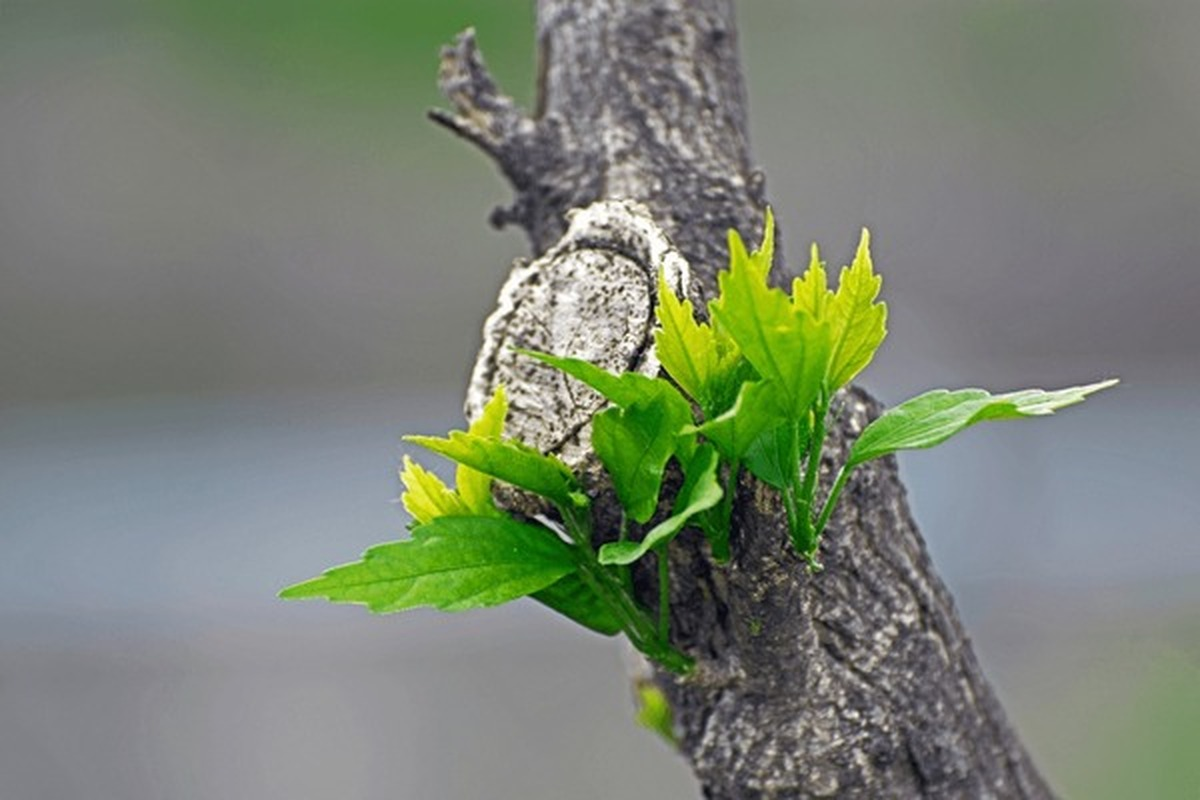
““Learn this parable from the fig tree. After its branch becomes tender and it sprouts new leaves, you know that summer is near. In the same way, when you see all these things, you know that the Human One is near, at the door.” Matthew 24:32-33 CEB
When you see those things
Can you believe it – a parable amidst the signs! Jesus definitely knew how to keep His people engaged. We might not ‘get’ fig trees, but Jesus’ disciples did, so He made the connection for them. The premise is applicable to our contexts – just as fruit trees put blossoms/shoots that signify fruit is imminent, the various manifestations we see are proof that the time is drawing nigh.
But of course we know that parables, or aphorisms as they are also called, are layered. Having taken the very simplistic approach, I was drawn again to what Matthew wrote.
“Learn this parable from the fig tree.“ We know parables as lessons. So why does Jesus say “Learn this parable”? The term learn μανθάνω refers to taking instruction from. So the fig tree parable is a source of education. But Jesus doesn’t actually say this all the time.
In fact, applying the Law of First Mention, we may notice something very interesting. In Matthew, Jesus uses parables from as early as the Sermon on the Mount (Matthew 5), but explained His use of parables only after His sermon on the Lake in chapter 13. And there, when questioned by His disciples about His use of parables, Jesus quotes Isaiah to explain that some truths are hidden within a parable. He further noted that revelation is reserved for the elect. This suggests that there is more to what Jesus said about the fig tree.
As students of God’s Word, we might recall at least two other encounters with figs. In Mark 11, a fig tree is cursed for fruitlessness, and we understand that it’s symbolic of God’s elect who are not fruitful. Conversely, Luke 13 presents us with the patient gardener who prunes and mulches a barren plant and affords it extra time to become fruitful. Again, it seems to reference God’s elect. These are not contradictory, but references two stages of development in nature, and by extension, two stages of believers’ lives.
The Mark parable, located close to the cleansed temple speaks to a tree that has leaves, ie it ought to be in fruit. Ever heard the term ‘having a form of Godliness, but denying the power thereof’ from 2 Timothy 3? That would be those among God’s elect mentioned in the parable. Luke’s parable seems to refer to a less mature tree that has deficiencies that have impeded fruitfulness. So dead branches are removed, soil is fertilized etc to aid in the fig tree’s productivity.
Jesus’ lesson from the fig trees seems to me to refer in part to God’s elect, whom we can consider the Children of Israel. If my theory is correct, then this may be a reference to Israel’s return to worshiping God in spirit and in truth – not to a physical nation (1948) – as Jesus stated to Nicodemus and later to the Samaritan woman by the well of Sychar (see John 3-4). A further interpretation then, would place the tender shoots as the recognition of Jesus as Messiah by the Children of Israel. This is but my own hypothesis, not necessarily supported by the exegetes.
There is another somewhat matching idea from my premise of the Law of First Mention that invites a return to the first mention of figs/fig leaves. If my memory serves correct, and in this instance it does, the first reference to figs/leaves occurs in Genesis 3. The First Adam used leaves to cover up evidence of his sin. The Second Adam, Jesus our Christ, returns when the fig leaves are yet tender. What a blessed reference to the reversal of the curse.
So siblings, we have a symbol and two signs to consider. A – Symbol: Christ’s Second Coming is the Proof (ie earnest or guarantee) of the curse being totally and eternally reversed. B – Sign 1: as with nature, when all the signs mentioned in the prior verses come to pass (possibly including the rapture), we can expect to see the return of our Savior. C – Sign 2: Christ’s return also is predicated on the return to True Worship by the Children of Israel. Could it be that the Head of Year, Rosh Hashanah, can eventually symbolize such a return?
With all those pieces, whether we have correctly interpreted or not, we have the assurance that it is only AFTER the visible manifestation of those signs that Christ returns. Look around? What are we seeing? Birthing Season? He will soon be at the door. May we be fruitful fig trees, ready for His return.
—
May all we seek be found in Christ