June 2026

The newly minted apostles didn’t love them and leave them, they were open to being in community. Community is important because it provides a safe environment for learning, engagement, and fellowship. Let’s explore this in more detail with Today’s Holy Nougat
Acts 2:40, 42 CEVDCI
- [40] Peter told them many other things as well. Then he said, “I beg you to save yourselves from what will happen to all these evil people.”
- [42] They spent their time learning from the apostles, and they were like family to each other. They also broke bread and prayed together.
Sent – to Strengthen Communities
It is important to remember that the 3,000+ Jews who joined them were living in the diaspora. They were not from Jerusalem. Yes, they were Jews, but Israel was no longer their primary base. It is likely that they or their foreparents left during the Exile, and returned as often as possible – to sing the Lord’s song in their ancestral homeland (see Psalm 137). Some new converts were with them, and they might have been visiting Jerusalem for the first time – as Jews. It was a mixed group.
This underscores Peter’s previous point about salvation’s universality. He wasn’t only speaking to ‘pure’ Israelites. Some intermixing had definitely occurred. In one sense, that was in contravention of the Law see Deuteronomy 7:1-4; 23:3). However, these were converts to Judaism, and the men would have been circumcised, so it was probably acceptable.
Whether they were fully accepted into the fold or not, they definitely found themselves a place in Jesus’ Way.
Self-Check
How do we respond to ‘foreigners’ becoming new converts in our spaces?
Application
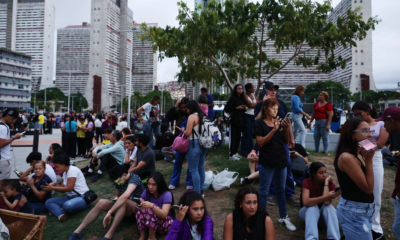
This point has two aspects. There’s the strengthened community that returns home to perpetuate what they have experienced, and there’s the ministry to migrants. Both are applicable in my current context of work and ministry. For, there’s a fairly large diaspora community here. We’re from everywhere. Some are settled, whether as permanent residents or citizens; others are transient, permit holders, il/legal migrants, refuge beneficiaries, etc.
Here, as with many other spaces, foreigners aren’t always heartily welcomed. Immigration laws are changing. Nationals, convinced that foreigners have nothing to offer to the country, are trying to establish stronger borders. Thankfully, the attitude doesn’t seem to be visibly reflected in worship spaces. Often, the foreigners have become ‘like family’.
One congregation is very intentional in incorporating and engaging foreigners. Each week songs from a different part of the world are sung, based on the Ecumenical Prayer Cycle (for more details, please visit https://share.google/Mx1n5OVUcSbXVYOhE). Everyone hears their own language over the course of a year – like the fellowship did at Pentecost. After worship, the coffee fellowship easily qualifies as breaking bread together. Transient visitors and residents readily find their space in worship and fellowship together.
This isn’t indicative of every church here. Some congregations cater primarily to locals, with little desire to assimilate. And that too, has its place. But it doesn’t foster openness as displayed during Pentecost. In that regard, visitors might not always wish to break bread, lest a hand of fellowship is not offered.
However, my home church here falls in the welcoming category. Our pastor is a migrant and has adopted the mission mandate of ‘sent-ness’ as per Acts 1:8. As a new fellowship (only 6 years old), we have always operated with the understanding of from there to here … and back to there …’. Like many in Geneva, our membership is international. We also recognise that some of our folks are here for a season, and will hopefully glean and administer what they’ve learned here upon their return home. Bible studies are all online, affording the wider fellowship, to participate, including former ‘full-time family members’. [If you need information about our online Bible studies or a link to watch our services online, please send me a private message.]
These are a few models of inclusion and traditionalism that may invite us to examine our own contexts. As we reflect, I pray that we are moved to ensure that we are, above all, God’s welcoming community.
Points to Ponder
How intentional are we about breaking bread with the visitor in our fellowship? Is there scope for improvement?
If possible, read material on the missional church, such as
– https://yellowstonetheology.org/being-a-church-for-the…/
– Source: Amazon.comhttps://share.google/N1kJhzIFaZb1NwWEo
https://www.amazon.com/Kingdom…/dp/B0H2SJSMNV… (this is a new one, I haven’t yet read it)
—
May all we seek be found in Christ