June 2026
Nougat 30

We often look at Holy Saturday as that in-between time when those who were family and followers of Jesus would have been at their lowest. They didn’t remember that resurrection day was coming. They were stuck at the crucifixion. Many of us are still living as though we’re not people of the resurrection or of the resurrected Lord. Sometimes life holds us in Holy Saturday, and we wait expectantly for something to happen, good or bad. Whether or not we know how the story ends, let’s turn to Christ in our moments of decision. Consider Today’s Holy Nougat , which invites us to remain in the space of uncertainty.
Acts 4:5-6 CEVDCI
[5] The next morning the leaders, the elders, and the teachers of the Law of Moses met in Jerusalem.
[6] The high priest Annas was there, as well as Caiaphas, John, Alexander, and other members of the high priest’s family.
The Trial
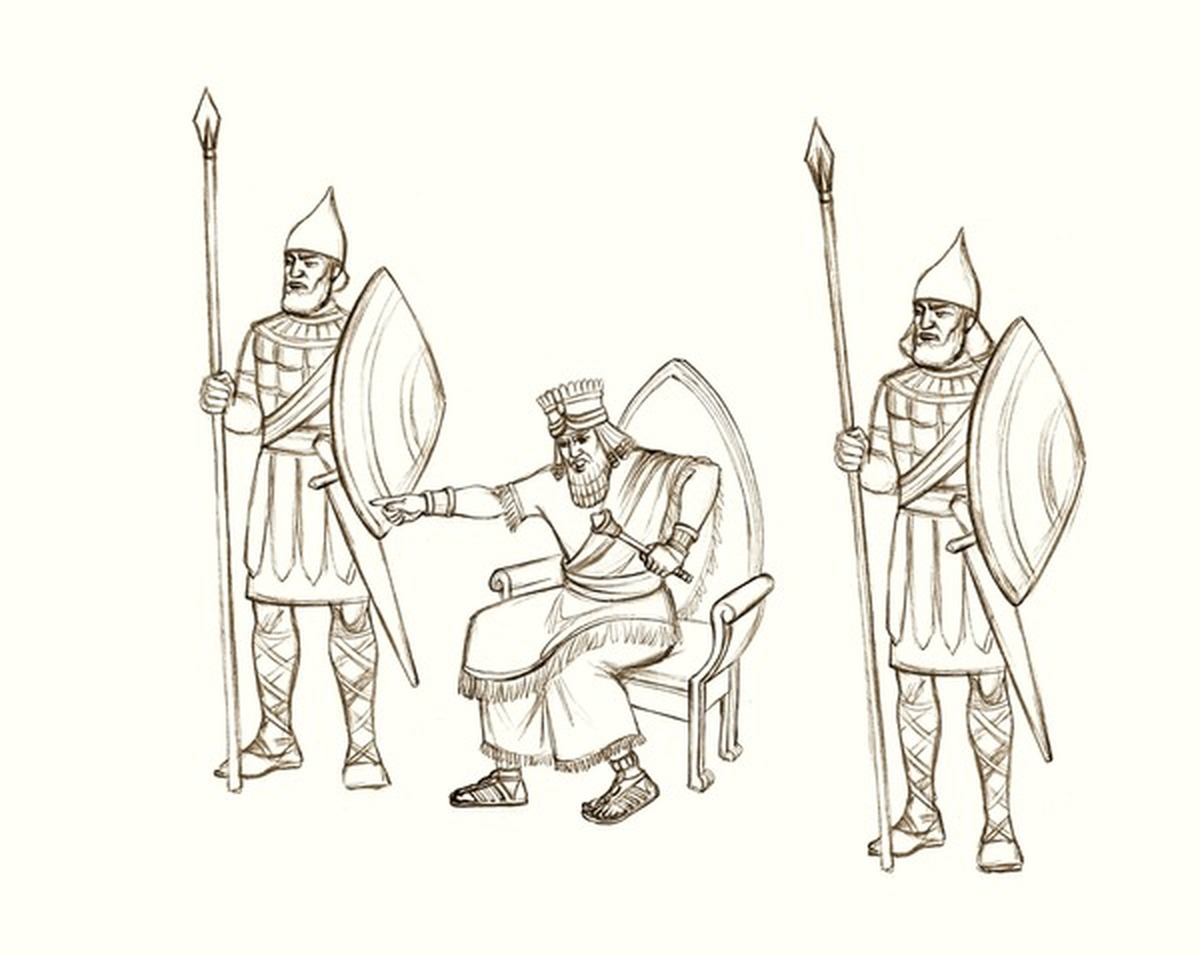
I’m sure it must have felt like deja vu to the tribunal. Except that this time, the people they were placing on trial didn’t claim to be God. They were only His disciples! A decision needed to be made. And, at this point, only God knew what the outcome would be.
From our vantage point, it was a group comprising the usual suspects – the leaders, the elders, and the teachers of the Law of Moses, the high priest Annas, as well as Caiaphas, John, Alexander, and some others from the high priest’s family. Again, we note that, officially, they were not lawyers or judges, but their tradition afforded them the authority to make judgements.
Self-Check
How do we relate to those placed in authority over us when their beliefs don’t match ours?
Deeper Dive
Although John, Alexander, and other members of the high priest’s family were not mentioned in Y’shua’s trial, Annas and Caiaphas were present. Luke’s audience would have heard of their reputation, or read about them in Luke’s first volume. On seeing the persons named in the meeting, they would have realised, as we have, that what Peter and John did was not perceived as a minor infraction.
And knowing Y’shua’s fate, it is likely that they already ‘knew’ how Peter and John’s case would turn. It was not looking positive. It is possible that Theophilus already knew that Peter and John weren’t crucified, but faced heavy persecution. The details of the trial weren’t yet clear. But the names on the council confirmed that persecution was pending.
How about us – are there situations that we face in which we’re left to conclude the worst? Those are Holy Saturday (liminal) moments. I can’t definitively tell us why we encounter them, except to suppose that God allows those moments to help us face our fears. And sometimes, we just have to live through them.
Liminal spaces and moments are not always Holy Saturday events. Yet their intermediary uncertainty can often feel intense and threatening. In that moment of decision, we have to discern our mental and emotional response and decide whether we’ll allow God to take over. We may opt to be as honest as the father who approached Y’shua in Mark 9. When questioned about his faith in Jesus’ capacity to heal his daughter, he simply replied, ‘I believe. Please help me overcome my doubts!’
I believe that since God’s already familiar with our innermost desires, we can be candid with God. Plus our honesty makes room for us to truly determine what is bothering us. In our seasons of waiting, let’s be attuned to ourselves as we look to Y’shua for solutions.
Point to Ponder
Read Joshua 1:9; 5:13-15. How might we draw strength from Joshua’s encounters with God in our seasons of uncertainty?
—
May all we seek be found in Christ