In our time, there doesn’t seem to be much significance to Bartimeus’ actions. But what if there’s more to the story than meets the eye? Consider Today’s Holy Nougat
Mark 10:50 AFV
[50] And after casting aside his beggar’s cloak, he arose and came to Jesus.
Casting aside His Beggars’ Cloak
Siblings, I’ve reflected on this story before. Yet, despite ruminating on the text in bite-sized servings, I am only now registering the significance of his throwing aside the cloak. If clothes make the man, then our Bartimeus was undertaking a makeover.
Alexander Atkins attributes the phrase, ‘clothes make the man’ to 3 credible sources: Homer, Erasmus of Rotterdam, and Mark Twain. The latter, he argues, is most frequently cited as the source, due to his twist on the quote in his short story, The Czar’s Soliloquy “… without his clothes a man would be nothing at all; that the clothes do not merely make the man, the clothes are the man; that without them he is a cipher, a vacancy, a nobody, a nothing… There is no power without clothes.” I am certain that our brother Bartimeus would beg to differ with the ending of the quote. For it is obvious that he had more power without the clothes than with them.
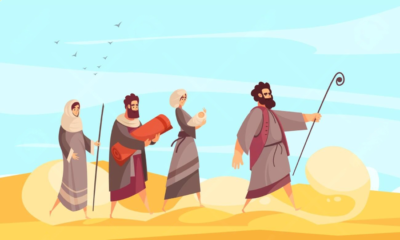
Under Pax Romana, a beggar’s cloak was indispensable. For some, it was their only possession. Functional on several levels, it was essential for their livelihood. It was more than just a government-issued garment, as:
The cloak offered protection from the elements
It was a convenient landing place for alms thrown at the beggar
The government issued the cloak as a kind of work permit, as one had to own a cloak to beg
It was thus a status symbol (albeit a negative one), as the owner was automatically understood to be a person with disability, or a beggar.
In throwing off his beggar’s cloak, Bartimeus was making a bold step of faith. It was likely that the coat would not be seen again, as someone could have appropriated it. (We assume that, having discarded the cloak, he was wearing other clothes). At any rate, he would have lost any coins located in the folds. Disregarding the potential outcomes, Bartimeus dispensed with the old life to embrace the new life in Christ. He had no guarantees, but off he went.
Self Check
How easy is it for us to step out in faith? What does it take to mobilise us?
Application
Bartimeus’ leap of faith took him to seeing Y’shua’s invitation as an opportunity to become a citizen of a different class, long before his sight was gained. That’s the substance of his faith. Throwing the cloak was ‘the evidence’ of the not yet seen. Truly, his was ‘now faith’ (see Hebrews 11:1). One might even say it required a sacrifice on his part.
Clothes did make the man under Pax Romana. When he threw the cloak aside, Bartimeus became the protagonist in his transformation, with Christ as his supporting actor. It was determination. It was faith. It was transformational.
Point to Ponder
How about us, will we be agents of our own transformation? Let’s take our beggars’ cloaks off.
—
May all we seek be found in Christ