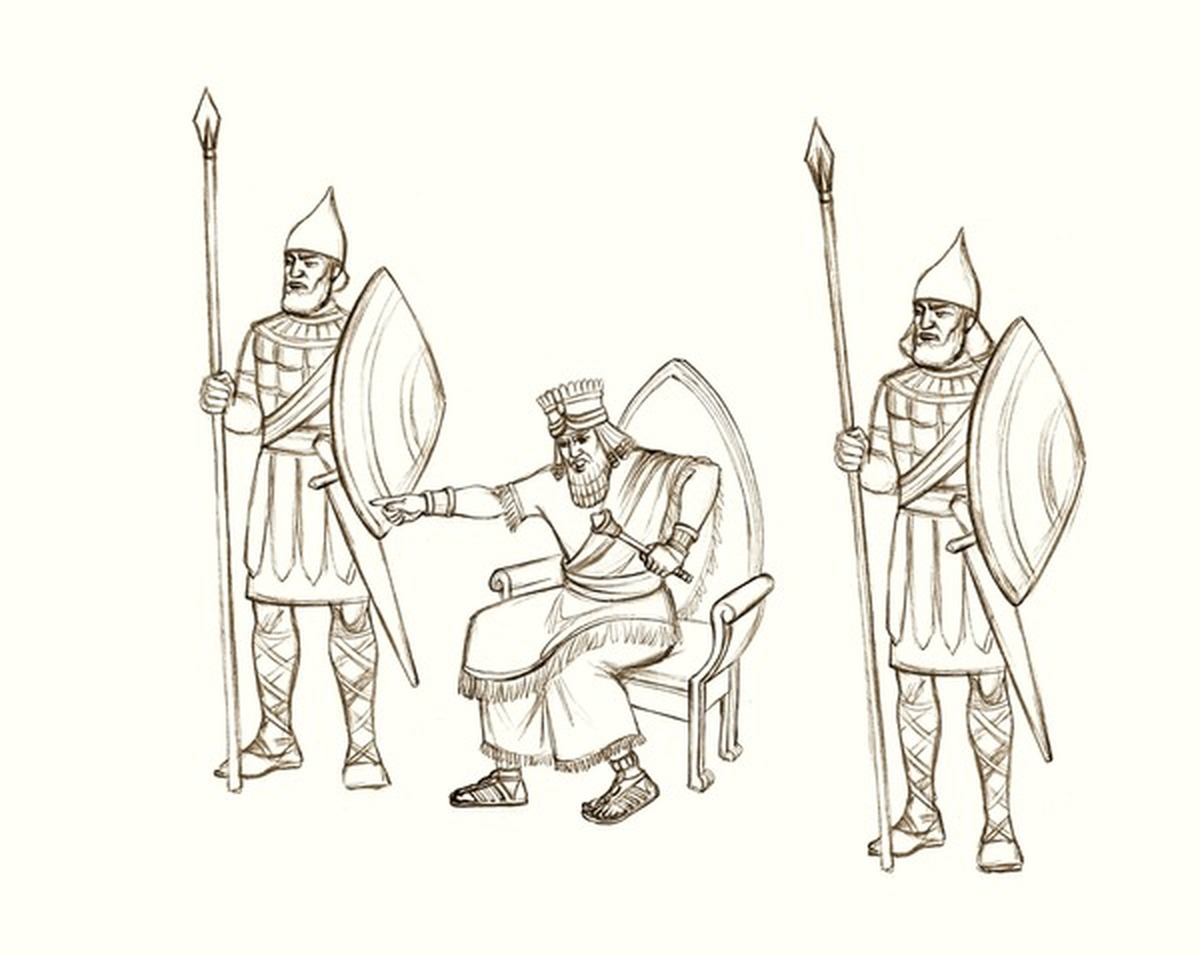
If ever you were asked to share your salvation story, what would it feature? Would it be more of a conviction story than that of conversion? I separate the two, as conversion (for me) suggests that we were elsewhere and came into a saving knowledge of God’s love through Y’shua; whereas conviction says I’ve known God (was probably raised in church), and have come to accept Jesus’ sovereignty over my life. We’ll be exploring some of those stories over some days. For now, consider Today’s Holy Nougat, which shares Isaiah’s conversion story.
Isaiah 6:1, 5 NIV
[1] In the year that King Uzziah died, I saw the Lord, high and exalted, seated on a throne; and the train of his robe filled the temple.
[5] “Woe to me!” I cried. “I am ruined! For I am a man of unclean lips, and I live among a people of unclean lips, and my eyes have seen the King, the Lord Almighty.”
Seeing is Believing
We’ve reflected on Isaiah before, he was a very major prophet in Jewish spiritual life. Called to prophecy sometime between 800-700 BCE, his words reflected judgement, hope, and forth-telling of the Messiah’s birth and second coming. Isaiah (or first Isaiah for those who wish to be more specific), whose name means ‘YHWH is salvation’, was the son of Amoz (strong, robust, or brave) and though purported to be of noble lineage, often spoke on behalf of the poor and disenfranchised.
Although his call story is shared in the 6th chapter, one could argue that the first 5 chapters speak to the issues of the day in both Israel and Judah. God’s messages to the chosen people were tinged with a call to repentance and an assurance that God’s glory would prevail.
It is often assumed that those first chapters preceded his moment of conviction. Should we ascribe to that argument, then we hear Isaiah narrating his acceptance of his call, subsequent to a life-transforming experience.
The prophet recounts his epiphany by placing the historical context with which others could relate. He noted that his divine encounter occurred in the year when Uzziah of Judah died. This was in the height of Judah’s glory days.
Self-Check
Is yours primarily a conversion or conviction story? Are there signposts included that people can relate to?
Application
Siblings, it was economically well in Judah, but all was not well spiritually. And, although Isaiah, the Jewish prophet, knew OF God, he did not have a perfect relationship WITH God. We will see in the next few days that it is possible to be ‘nearer to church, but far from God’.
Like Isaiah, we can find that it is through a divine encounter that we ‘see the Lord, high and lifted up’. YHWH’s train filling the Jerusalem(?) temple was a message to Isaiah that YHWH’s sovereignty superseded that of any other ruler. As one who lived in that era, Isaiah rightly interpreted the message and concluded that what he’d been previously involved in was mere lip service to God’s glory. In realizing that he ‘had a form of godliness …’, Isaiah quickly repented.
Point to Ponder
Siblings, whether it’s conviction or conversion, Isaiah’s story reminds us that seeing is believing. And on believing and confessing, there is hope for us to be an effective emissary of the One Who called us.
Have we seen the Christ, and are we souled out to the message of the Gospel? Selah
—
May all we seek be found in Christ