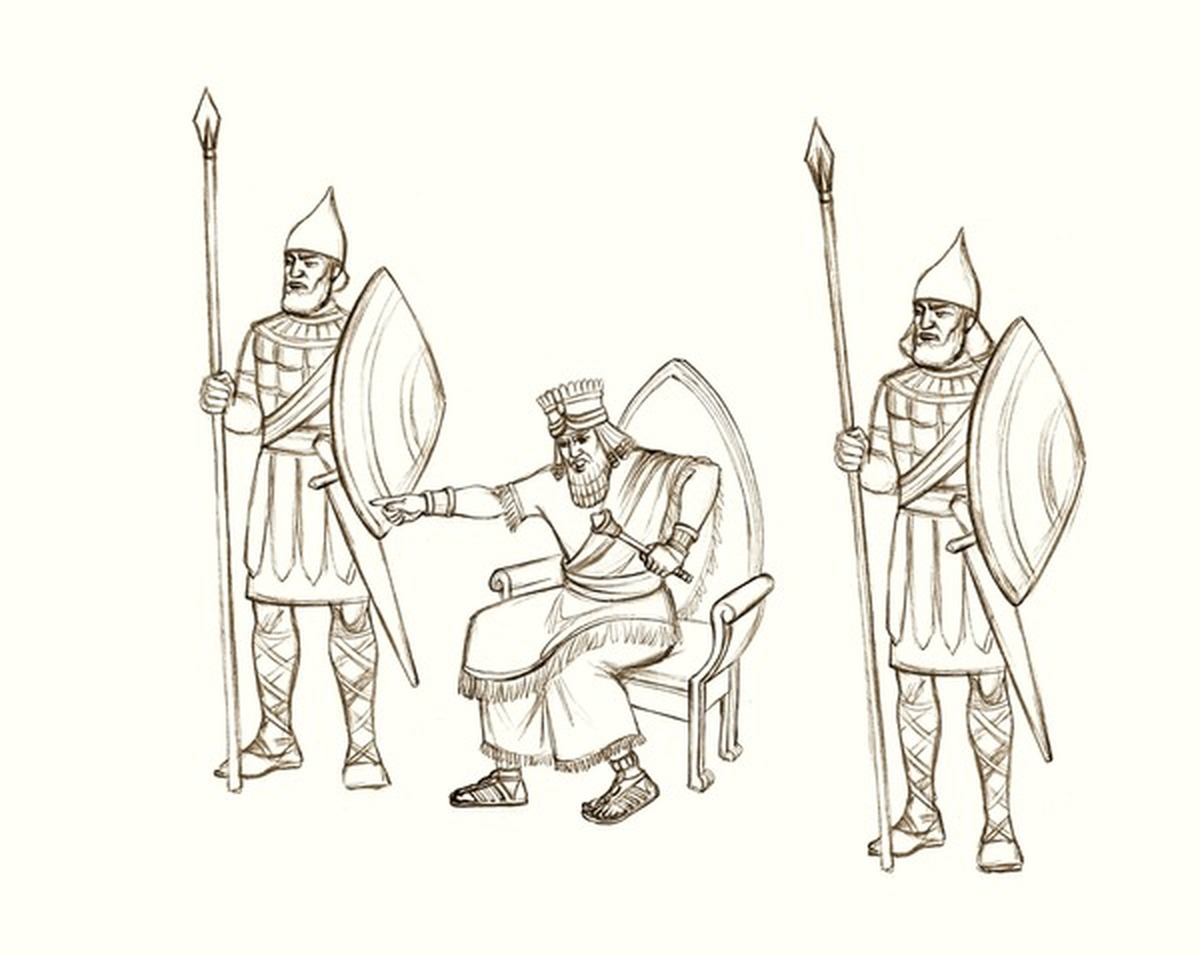
There is a word that’s quite popular in biblical texts, particularly Hebrew texts, which has been misused or misinterpreted by some of us believers. The word is ‘Fear’. When used about YHWH, one might wonder how to respond, for we shouldn’t worship that which, rather one whom we fear, should we? Could it be that there’s a slightly different timbre to Fear? Consider Today’s Holy Nougat.
Psalms 34:9 NIV
[9] Fear the Lord, you his holy people, for those who fear him lack nothing.
Fear YHWH
To some extent, Fear YHWH means just that. Fear YHWH. For, if demons tremble before the presence of YHWH (see James 2:19 for the full reference), then we know that YHWH is not a trifling God. Moreover, we are reminded of YHWH’s prowess and might in Exodus 20:2 – I am the Lord, your God, Who brought you out of Egypt, out of the land of slavery. Anyone who can single-handedly overthrow oppressive powers ought to be treated differently. And God has overthrown them all.
Self-Check
What is our base response to YHWH as God? Why?
Digging Deeper
Psalm 34, which has experienced a renaissance through the Brooklyn Tabernacle Choir and Shane and Shane rendition, refers to fear at least 5 times in the 22 verses. It is a reasonable occurrence, given the circumstances under which it was written. This psalm is attributed to David and was a praise response for God’s protection from Abimelek, the king of Gath.
It may seem a bit ironic that David was even in a position to be fearful, since he had overthrown Goliath, their prized warrior. There is a sense in which David’s madness wasn’t fake. He found his way to Gath in an attempt to escape his king, Saul, who had become David’s sworn enemy. Have any of us been there? Obliged to rely on the crumbs offered by our ‘enemy’, because our ‘friend’ turned against us? David’s life was in real danger …he was between a mortal and a sworn enemy. Yes, acting crazy before Abimelek presented a safer option than remaining in Israel.
The praise song glorified God’s greatness in preserving David from himself and his megurah (fright; see verse 4). Interestingly, the Hebrew root, megurah, also refers to a barn or granary, i.e., a grain storage. Could it be that David’s fear was an accumulation of all he’d faced and hadn’t dealt with? Yet God offered release from them all. Hmmn.
Fear in verses 7 and 9 however, is directly about humanity and God. In these references, fear yare refers to dread, terror, being afraid, or reverence. It can also refer to a terrible thing. I agree that God is to be feared. Yet, when fear is placed in the context of receiving protection, deliverance from one’s fears, and is sandwiched between words of praise; one wonders whether fear ought to be about reverent worship.
Moreover, it is God’s holy people, the qadosh, who are called to fear God. If God’s holy people have been set apart by God, which is required: to be fearful, or worshipful? Perhaps both. It is God who set us apart. So fear, ought not be our default. God desires a positive relationship with us, born of choice; not of enforced servitude.
So, as God’s qadosh, how do we respond to all God has rescued us from?
Praise Break
As we join the Brooklyn Tabernacle Choir, can we also think of reasons to magnify the Lord? Let’s exalt God’s name together